Greetings | The Center for Independent Living of North Central Florida welcomes you! If you have any questions about the center or the services we provide, please contact us at 352-378-7474. Our number again, is 3, 5, 2, 3, 7, 8, 7, 4, 7, 4.
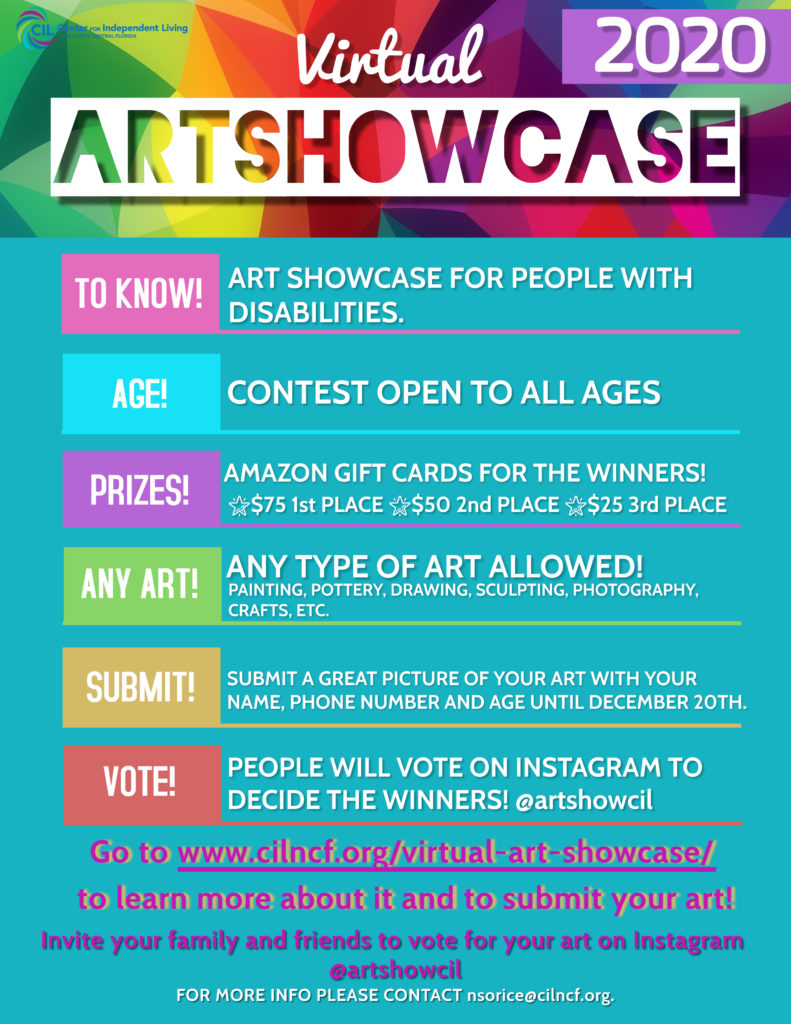
Join us for our first Virtual Art Showcase! We are highlighting art of all mediums created by our community of people with disabilities. If you or a friend is interested, check out the details and register below.
Shera Curtis talks Community Outreach, providing resources and services to any one who is in need. If you have a disability, call and connect with Shera, who serves to provide you with information and referrals, one of the 5 core services you can find at all Centers For Independent Living.
Welcome back to another episode of The Independent Life. And I am very excited to have Shera Curtis with us today, community outreach specialist, and she does so many different things and would want to ask you first, you know, off the bat, just broadly speaking, what is it you do here at the Center for Independent Living?
Shera Curtis 01:11
I am the plug for the people. I’m the community outreach specialist. What that means is I provide resources services to anybody in need. If they have a disability, they call and it’s more like I&R. So I&R would be information or referral, where you have a question about how do you get a light for your wheelchair? Or how do you sign up for SSI? Or, I mean, the the question can be from A to Z. And I’m there to give them that resource that connection, and the answer.
Tony Delisle 01:43
So information or referral, one of the five core services that all Centers for Independent Living do. So we don’t provide all things for all people. But we want to know, in the community who does serve or provide resources for people and connect them to that. Why do you think that is important that we provide this kind of a service?
Shera Curtis 02:04
so that Martin Luther King said, “Life’s most persistent and urgent question is what are we doing for others?” And we did a needs assessment at the beginning. I think when I first started in February, it was a transition. So I was just being on boarded, and then COVID hit. And we were trying to figure out how to meet the needs of our people, how to meet the needs of our consumers, and still provide our mission and our vision for the for the organization. And with the needs assessment being done, we noticed that there were a lot of people in the community that didn’t have food. And it was a major food insecurity within Alachua County. And so I first started out with Catholic Charities and Catholic Charities offered food that was free. But I noticed that it wasn’t, it wasn’t sustainable. It wasn’t. It wasn’t ideal, the food that they were providing. So I looked into other resources. And then we we we stumbled upon the relationship with Brenda the Mighty. Our first box was a food box. And I think we had like two or three pallets. What was it? It was quite-
Tony Delisle 03:11
we got hundreds.
Shera Curtis 03:14
It was quite a bit of pallets that we had, and it was the food box was a little bit more ideal. It wasn’t to the place where we are now but it was the next step. It was granola bars, tuna fish, ravioli. So there were a lot of different combination foods that were more ideal, what people would eat. Nuts, things like that. And then we gave those out. And we started out with just I think we just were connecting to the consumer, just individual consumers, we would deliver them they would call and it was an I&R call, they would call in and we would be like, okay, we have food or, or we would do the needs assessment. And if we hadn’t done it and say, Hey, are you needing food or you needing these resources, we have this for you. And so we were able to connect them then. And then it expanded just a little bit further. And we were reaching out to housing properties. So these weren’t just one and twos. These were 50 and 60 and 70 people in one location. And we said, okay, if we have the resource to connect them to the food, we’re going to be able to provide services or substances for all these people in this local area. So we expanded now to where we’re doing food distributions every week. And we’re giving over 300 food boxes a month to people in need. I think that’s a really good start. I think we started with maybe five or six in a week and now we’re up to at least 70. So we are grown. We’ve definitely grown.
Tony Delisle 04:46
That’s phenomenal. And I’m glad you mentioned that in February and 2020 you came on board and join the family. And March 13 I’ll remember that day it was like a Friday I believe. We decided because of the COVID pandemic that we were going to have to lock our doors. But we’re going to continue to do services, and many of which is in the virtual world, but what services. And you worked very hard to create a needs assessment, to go out into the community contact, the people we were already working with, and then contact people we didn’t know with disabilities, to see what their needs are. And you really landed in a place that was lockstep with the Florida Department of Emergency Management. Through our collaborations with this agency, we were in the state’s Emergency Operations Center. And we’re working with food distribution networks because of that. And this was one of the biggest, important responses that the state, county, cities were doing in terms of meeting the needs of the people due to the COVID. So it was really exciting for me to see that you through your needs assessment had identified the needs of the people that was also identified through the Florida Department of Emergency Management, we were able to connect those relationships and make that happen. And one of the things that really set us apart was because the state was distributing food publicly, and people could drive up and get food and throw it in their trucks. Of course, a lot of the people through your needs assessments were finding out didn’t have transportation, weren’t able to get out there for other reasons. And even if they were, there were some access and functional needs that weren’t being met if people you know, needed to communicate, or deaf, or if people needed to communicate and had either cognitive impairments and couldn’t, so the effective communication piece wasn’t there. So the idea, and that you were able to do is what’s get the food to the people where they are in the community, not have them come to these distribution sites.
Shera Curtis 06:50
And it was a lot of even just to say some of the insecurities were family support, a lot of these people had pre-existing conditions, and their families weren’t coming around as much. So they were trying to figure out, how would they get groceries. Some of them didn’t have the resources to get the delivery services. So it was very timely, that I was able to come and say, Hey, you don’t have to come to the center, you don’t have to drive anywhere, I won’t even have to make contact with you, I can leave them at your door. And then we can make the transition there. It was also I was very intentional about how I was upholding the CDC guidelines with having multiple, multiple bodies touch the foods and the products. I would make sure I would sanitize things, I would sanitize my hands, I would be washing my hands or, or whatever the process is where I would do those regularly, every time that I dropped them off and making sure there was no contact, reassuring them that there was no contact. So they definitely felt comfortable. And they felt secure, even with the family not being around. So it was just like they were… I was making the connection to be a part of the family.
Tony Delisle 07:59
I appreciate that. Because at the you know, the start of this pandemic, you know, there was a lot of fear, things were getting shut down, stay at home orders were in place, and the precautions that are needed to be taken in terms of picking up the food, touching the boxes, transporting the boxes dropping off the boxes, there’s so many attention to details regarding the CDC guidelines for safe and effective ways of mitigating any infections that were there a lot of details that were being paid attention to. And I know that was appreciated by some of the people that you were delivering food to. I’m interested to know what was it like for people when you were able to connect with them, the food, or I know you’re also delivering PPE and other essential resources, disaster preparedness supply kits and, and self care products and all these other kinds of things. Aside from those resources, what else were you experiencing when delivering these essential resources to our consumers and the community?
Shera Curtis 09:00
I think we were, we were bridging still out more. A lot of people didn’t know that we were here. And even the ones I did didn’t know that we provided such services. So giving them a place where they can connect and have a solid connection of solid plug of resources. I think presence. It was a lot of presence. A lot of people were just grateful that someone cared enough to come out. And it wasn’t just a random person. Just kind of throw it in there. You’re on like a newspaper. I would knock. I would talk to them. Sometimes… there was a lady. I’m not sure what the the city was, but it was past Waldo road past out there. Where’s that past? It was going way out there. I didn’t even know that was a little city. She was out there. Her daughter was a nurse. I think her son had, I think he was visually impaired. So he was he was disabled and he had limitations. So they were they were stuck out there for a while. I remember going out there and I was coming to deliver her some food. Of course, I didn’t know that she was that far from Gainesville. So I was like, you’re in the middle of nowhere. How do you get resources, there was no delivery services. I think Amazon was just starting to transition there thing to, to drop off food and stuff. So everything was she was she was pretty much in isolation out there. And one thing that I remembered about her was, she was so grateful that the CIL even came that far, that I sat and I talked with her. She definitely suffered, or she was just dealing with depression, not knowing how to reach out to people and not knowing where her resources were gonna come from. It was a state of hope that I saw in her. It was something I think that was kind of… the best word is hope. Because a lot of people were on edge, they had so many pre-existing conditions that they were afraid to talk with anyone to reach out to anyone. It was just like, I’m staying home, I’m not going to go to the store, I’m not going to do anything. And it was just to say that there’s hope that that someone’s going to come out here that someone’s going to provide food, that someone’s going to talk to me because I sat there for like two hours and talk to them. We did the needs assessment survey. So I was able to get her connected to Meridian for some support. I think I talked to her son about getting some help with legal issues that he had regarding his disability, and what prompt that. So I was able to connect them to legal services, to Meridian, to seal with more opportunities for just ILS classes if you want it to not feel alone, but you want it some support to to get through the pandemic, maybe you could try ILS classes. So it was a lot of just connecting with people. I think that’s one of the bigger components that people miss about community is the connections you make with people, and the relationships that are built, that goes for supplies, just delivering food.
Tony Delisle 11:56
I like what you’re saying there about presence, and just being there and present with people, especially people with disabilities who already before the COVID pandemic are more likely to experience social isolation, smaller social networks, and this feeling of loneliness, which has been shown to be a killer. And the fact that, you know, yes, you have some essential resources that you can bring to people, but just making that head and heart connection with people and just being present with them. And I believe this was early on, in the pandemic, you know, a month or two early on, and the recommendations are isolate, isolate, isolate. More isolation for people that are already isolated, and to bring the value of presence to people, is just wonderful to hear that that’s another thing of value that we’re able to bring and continue to bring for people as we now are in November, as we’re recording this. I think the the mental health impact of this social isolation and loneliness is becoming better understood, and it’s reach. So I think that’s wonderful that you’re able to deliver those kinds of things. I’m interested to know, what is the importance of collaboration with different organizations in order to be able to do the services that you bring here. You know, it sounds like you work with many different types of agencies and organizations to be able to deliver some of this the essential supplies that you do or connect people, like what did what do you see being the relevance and importance of having those relationships with these organizations?
Shera Curtis 13:30
Larger numbers, I think that’s the thing. We want to connect to people, we don’t just want to do one or two, we want to do one or two, we might as well be individuals and their own, you know, sole provider thing. But we’re an organization that we’re connecting, we want to connect hundreds. We want numbers. So that’s the best way to do it is to partner with people who have more, more resources, more connections. I mean, one can put 1000 in the fight two can put 10,000. We want to make sure we expand that and make sure we can reach everyone. I think even when we go out to outreach, I’m always finding that more people need to sign up. And then my cousin who doesn’t live here, they can sign up. So if I’m connected with Gainesville housing, I can connect to not just one housing development, I can connect to five other housing developments. And I can reach five more people or five more, five more locations where people have needs opposed to just one one location that I know of. So it’s I guess it’s a numbers game. Just making sure we can reach more people and meet their needs.
Tony Delisle 14:38
I think in the military, they call it like force multipliers. You know, where we can…The idea being we’re, you know, the whole is greater than the sum of its parts. And you know, it takes a village and there’s all these, you know, interesting cliches and sayings that are out there, that when we do kind of come together and we can collaborate, we can reach more and do better. What do you find to be the essential skills in cultivating these kind of relationships to leverage the resources to meet the needs of the people? Like how do we get those relationships?
Shera Curtis 15:29
Patience, understanding, and transparency. A lot of it is listening, these people want to be heard, I know we’re going to talk a little bit about just how it intersects with what I see or how I’ve seen things be exposed to with people who have disabilities. And that I think that’s one of the things is being transparent, and saying, hey, I’ve gone through that same thing too. I may not be disabled, I’m black and brown, and I have the same issues you have with access. So listening to them to give genuine feedback, to build relationships to build trust, because that’s one of the biggest barriers that happens in communities is there’s no trust for outside organizations. And we’re there to do that. We’re there to build trust, we’re there to listen to them, we’re there to meet their needs. And we’re there to get their perspective on on what loss looks like, on what insecurities look like for them, or what their disparities are. I mean, there’s a lot of components that come, which is community outreach. And then from there, those bridges are built. And we want to keep it sustainable. And I think that’s one thing that I have done with the food distribution is I’ve been keeping it sustainable, or these people are looking for me, every week, every other week to come up, they’re waiting for me at the building. They’re calling to say, hey, you supposed to come at one, it’s 1:01, I don’t see you. And I’m just like, I’m right outside the parking lot. I’m coming, and they’re ready. Because they trust me, they trust us sores, they trust CIL, they know that we’re going to come. They know that we’re going to stay connected with them. And that’s how I guess that’s how the relationships start.
Tony Delisle 17:13
That’s fantastic. I like how you’re connecting trust, with transparency, being authentic. And it does take patience. Patience is a virtue. Oh, man, like, you know, we’re wanting to do things quick, fascinating in a hurry, because the needs are immense. But we can’t just show up and then expecting to know who we are and what we’re all about. They got to take that time and someone share that I find to be very authentic, very transparent, and this is who I am. And it’s just wonderful to have you out there boots on the ground, connecting with the people and building these relationships. And garnering the kind of trust that it’s priceless. That’s a value, you know, that’s it takes a lot of effort and heart to do.
Shera Curtis 17:54
That is true, it’s hard. I could speak on patience. And we have one of the issues, we had an issue out in the… it wasn’t necessarily an issue, it was more so dealing with community and knowing that sometimes you have conflict. And this was one of the great opportunities to show how you can be patient. We were doing the food distribution, and a lady had dropped her cake. And she didn’t want it, but I couldn’t take it back. And so it was just more so I can’t take it back. You can throw it in the trash, and I can give you something else. That escalated from I know that I can get another one and you’re gonna let me get another one. And I won’t set right now, I just want you to listen to me. And I was just like I am listening. But I need to just go throw it in the trash. She didn’t want to. It was just like it was just a moment where I had to be like, let me just give her what she wants. And let’s move on. So we can de-escalate this. And that was patience, because I didn’t know her logic in her approach to this. But I wanted to try to be understanding and say, You know what, whatever you need, I’m going to just do it. So we can just kind of move on and get your needs met. And so we can move on and help other people. And that was a sign of patience recently that I had to have because she stepped my face. She tried me. It was it was definitely like she was crossing boundaries. And I was I had to make sure that I was going to be patient with her that I was going to still be kind that I was going to still be professional and outreach. Those things happen more than that. You’re coming in their space. And you have to make sure you follow their rules just as much as you follow your own. And that’s a part of the trust thing. It’s still, even though I’ve been there for so many times, I’m still building trust, and relationships with each and every person. That was definitely a day for patience. Definitely a day for patience, and just being able to fall back and say, how can you make this better? How can you de-escalate this and still get the job done? And we did. We de-escalated the situation. She got what she needed. She went on about her day, and everyone else got the resources they needed as well.
Tony Delisle 19:57
Yeah, I’m glad you’re bringing that up because like anyone that works in the human services field knows that we’re working with people that are on Razor’s Edge often living on the margins, a lot of pressure, a lot of stress. So we’re meeting people, like you said, in their space at a time where they’re vulnerable. And when people are vulnerable, and they might not know who you are, they’ll project out onto you. It’ll be tough. And what I hear your response here is also not just patience, but respect, you know, having respect. And I know that’s something that you and others that work here at the center, have when people come to us, with no fault of our own, are frustrated, or disheveled, may project out onto us. But what I appreciate about you and others that work here at the center, we’re able to have that emotional intelligence, to be able to still work with people, no matter how they might be feeling, or acting, and be able to meet their needs. And that says a lot about someone that’s in your position charged with community outreach, and working with people to actually where they are. So that’s a huge part of what you do appreciate that attribute about you Shera. So if you could, you you do this essential resource distribution, a lane that Centers for Independent Living has really never done before until COVID. And, and because of COVID, now we have this opportunity to deliver resources to people that have access and functional needs. And so it’s just wonderful that our center, and there’s a good handful of centers throughout the state that are doing this as well. But you also do a lot of other things here at the center. So maybe if you could speak to some of those different areas, there’s different hats that you wear regarding some of the services that you do for the folks that we serve.
Shera Curtis 21:41
Well, I am a queen at program development. I love to come up with, if I see a need, I want to fill it. I want to fill it. And I remember when this was one of my projects, we we got the mass delivered 22,000 masks, and we were just like, oh my god, what are we gonna do with this!
Tony Delisle 22:01
This was when masks are hard to come by. Yeah.
Shera Curtis 22:03
And it was just like, we need to figure… I need to figure out a way to utilize these, get these to the people.
Tony Delisle 22:08
Literally 22,000 it was for the Florida Department of Health, thank you.
Shera Curtis 22:16
And I came up with a project it was art through PPE. So my background would I’m a teaching artist. And it was just like, I can be creative in this. And I can approach this informationally artistically, and be able to get to the communities that we need it to be informed on what COVID looks like. And it was a, it was a project for kids. So we got the masks, and I can’t wait this whole program layout on, we would give a booklet. And the booklet would be interactive. We also gave them information on you know what, what you do to prevent it? What does it look like? What does COVID even look like? You know, with kids, they’re so out of touch with reality. Sometimes, it was just like, well, kids aren’t getting it, kids aren’t dying from it. So we had to give the information on. There has been a kid that has died and has passed away in Gainesville. And what it looked like to wash your hands more to be more sanitary, to make sure your social distancing. If you’re not going to be around people that you’re around every day and knowing their routine, it’s okay to wear your mask around them. It’s okay to take those precautions. And then you can create while you’re learning. So that was one thing that I did was the Art Through PPE. And that was a way to kind of get more masks out there, especially to those who had disabilities. But those who didn’t have access to that information sometimes or weren’t receiving it the way that someone was projecting it out. So it was just a way that we can come in the community and relate to them how they knew. And one thing about some of these communities is, especially these underserved communities, they’re creative, they’re innovative, but they lack access, they lack those tools to get the information. So that was one thing that we did. I do I&R. That’s information and referral. And that could be anything.
Tony Delisle 24:09
Give me some examples like examples of I&R in the field.
Shera Curtis 24:13
There was a very active mom, she had a child who had disabilities. And she had resources, she had connections. But she was looking for more she was looking for how to transition her son when he got to an age where she was no longer going to be he was no longer going to be an adolescent where he was going to have to learn independent living skills or he was going to have to be on his own and what that looked like. So she was looking for programs that were full of resources, not a babysitting program. She was looking for a program with substance, good leadership, good program models. And I literally we were doing research together on what the programs look like comparing them to programs out-of-state. I mean, looking at grants and telling her about grant opportunities she could look into, even with how to get housing and get a like a location established where she could have a group home or transitional home and establish that herself. So I mean, I&R can start at just a simple question. Sure, it can go into research that I laid I connected this lady with, with grants with other organizations, she connected me with outsider state organizations that I didn’t even know about, that I was able to say, Hey, we don’t have this in Florida, that might be a good idea for you to kind of branch out and see what resources are available and how we can started here. Shoot, there’s, there’s a million there, there’s like a million of them. It’s from from questions to internships and, and working with students, I think that’s one of the good things. I I am a connector that is that is my gift as a… as a person. And I love letting students have the opportunity to see what real community looks like, what the heart of Gainesville looks like. And that’s one of the things that I do as well is is getting interns to come and see how they can be connected to the community through CIL. And and learn how we can help people who have disabilities, you know, reach their state of independency. And what that looks like, ideally, for on a regular basis that would just let me send you to the ILS classes every day and kind of just briefly talk to you know, we’re building relationships, I know what they’re doing on a regular, I know your mom, I know your cousin’s name. I know your auntie that lives down the street, I know about her, cuz you told me about her every time we come to class. Or if I’m out there in outreach. I’m learning about Mr. Mack, and his granddaughter, and I know his granddaughter’s grandmother, and how we make these connections. And now I come and Mack is like family, like we’re building these relationships. And that’s something that can show the students that it’s not just a job, it’s a lifestyle, it’s definitely a career path. And that’s one of the things I love about just one of the opportunities I could do is internships and that development with them and relationships. What else do I do? we’re working on a grant right now, on and off, because that’s one thing. Like grants, how to expand what we already have, and make it sustainable. One big thing that that’s for me is I want to not just give people access, I want to make sure it’s sustainable for them, I want to make sure they can, it lasts for ages. And not just and we understand what true sustainability is. It’s not just the access to economics, but how they take care of their environment, how they, how they socialize, and adapt and connect with other people around them, and how that affects them. We will talk about people’s mental health and their state and how they feel and you talked about the isolation, and loneliness, we try to connect all those things and make sure we’re able to give them a complete state of independence and what that looks like and carry them to the next phase.
Tony Delisle 28:05
Yeah, I think that’s the beauty of doing information referral is that you can get calls from so many different needs. And if we think about the systems that are out there that people have to navigate, whether it’s the health system, the education system, employment systems, transportation system, housing systems, these things systems are any one of them by themselves are massive and complicated and confusing. And the fact that we have a service that can really help walk people through that system, and to do what we kind of call the warm handoff into an agency or a resource or some, some other place that it’s not here’s a number, but here’s actually like somebody that I know like you said, that I can connect you with and now can be there to connect you with. Do you need help with an application or you know, any of these other kinds of things is wonderful. Now I know you also do another service, which is our durable medical equipment closet. I didn’t know if you wanted to talk about anything that you do related to that and how that program works.
Shera Curtis 29:04
If you’re listening we have shower chairs for days, wheelchairs for days, you can come by the CIL and come pick them up. But to be serious during the durable medical equipment closet, it, we get wheelchairs, walkers, shower chairs, anything that you need for mobility purposes, we have those housed and they’re free of charge. I don’t know how many people have been so grateful as to call and say, I can’t even get around the house. And I’m just like, we have a closet that has wheelchairs or or walkers if you need that. And it’s like a life-changing thing. I think that’s what one thing I like about the CIL is these are these are real stories. These are real people are real needs and we are able to meet their needs so quickly, which is something so simple to us but seems like mountains to other people. That’s one thing I do like about the durable medical equipment closet is that we’re able to just connect people who have like substantial needs of mobility, that they’re not getting around their homes. And we can say, hey, not only can I provide you with this, I can come drop it off to your house. You’re already having mobility restrictions. So let me make this easier for you Let me do this transition for you. They fill out the paperwork, and it is literally a sheet, their name, what they’re getting. And just a signature, and they’re able to receive those, that access. And I think that’s a great thing that we offer. I think the durable medical equipment closet is is like really good. And literally now, even with thing people on a regular basis, do you need a chair? Like, not messy? Do you need a wheelchair? Do you need these things? Sometimes they do. And sometimes they’re like, I didn’t even know you had that. But I know somebody who does. So not only are we just being a resource to them, it’s it’s like a tree, we’re definitely our branches are reaching out further, we’re definitely connecting, this is why I love the fact that you brought up the partnerships. Now Gainesville housing, those that we offer the durable medical equipment closet, and they’re able to talk to not just the locations that were there, but also others that say, hey, if you have these needs, Center for Independent Living can be that resource for you. So I’m loving all that we have over here, it’s still this, it’s been a great experience, to be honest.
Tony Delisle 31:27
Well, I really love what you brought to the table in terms of your personal attributes that you really turn into your professional strengths, being able to connect with people, whether they’re the consumers that we serve, whether it’s the other agencies that we work with, like you mentioned Brenda The mighty Food Bank, that is working very closely now with our center because of the relationship that you have made with them, and understanding what we do and who we’re doing it for. Because of that, they’re allowing us to use their food to bring it to our people. And it’s that relationship is that personal connectivity and understanding what we do and why we do it. And you’re able to do that with so many different types of people from all different kinds of backgrounds, walks of life. And that is something you can’t really train in people, you got to bring that to the table. So I just want to acknowledge you for for bringing those types of skills to our center. And to be a wonderful part of the family here that does this kind of work. So I got a couple questions to wrap this up with. You’re one of our newest members you came in and February 2020. We’re recording this in November. So we’re not even be barely 10 months with you being on here. But what would you want other people to know about people with disabilities? One of the things that we’re trying to do here at The Independent Life podcast is give people lens into the world of what it’s like to have a disability. What would you want other people to know that you perhaps have learned yourself in working with people with disabilities, or just what you’re doing collaborating with relationships, or leverage resources or, or any of those other kinds of things that you’ve been doing since you’ve been here? What would you want people to know about people with disabilities, and perhaps the work that you do?
Shera Curtis 33:19
That the walk of life that they live is not too far from where you are. I’ve found a lot of intersectionality with my life, being a black and brown person.,with people who have disabilities. There are so many limitations, there are so many restrictions, but they are persistent. I think that’s the one thing that I can say and see, that are also seeing myself or in that community is they’re persistent, they are strong, they’re resilient, having to be limited with mobility, some people who don’t have ramps that come out of their homes, how they have to get out of their homes, and push wheelchairs out the door, to jump out the house and just all these maneuvers that they have to make. But that’s normal. And then they they do that, and then they go about their day, or how their their access to getting food is limited or how they can’t fill out an application and they need assistance. But they still try to make those connections I guess to to see the needs or, or meet their needs. I think it’s we aren’t that far from where they are either. So a lot of times it’s just don’t forget where you came from. These are, they’re people too, who have real needs who have really emotions. And we have to just be mindful of that and be able to be helpful. I think it’s a great thing when we can we can really connect ourselves with people and on a just a basic, humanistic thing. Just, just be kind to people. If you see someone in need and you can provide that need, be there, be that resource Whether it’s not to give them something, but to offer them another opportunity, through CIL, or whatever it is. I guess that would be my thing is to don’t forget that we are all connected as humans in some way, shape or form. And to be kind to people to learn that helping hand. You never know how it can change someone’s day, could change someone’s life, and could provide opportunities for you even in the future.
Tony Delisle 35:26
I love what you say about you know, we’re not that far. One of the things that we’re really trying to emphasize in this podcast is that disability impacts everybody, if you don’t have one, you know someone that does. If you don’t have one, you’re likely going to get one in your lifetime. And so what we put out there, and how we help each other could be coming back around to us one day as well. And I love what you said about persistence, we’re going to in these episodes get into a deep dive about the virtues and values of having a disability. And certainly the virtue and value of being persistent in life is full of challenges and obstacles that we have to be persistent in order to get over, around, under, whatever, through. Persistence is a virtue that disability provides us the opportunity to do and to be a part of so I really love that you have found that to be something that you know, is seen through people. So what does the independent life, living independently mean to you? And from the work that you have done here at the center, from the way that us you have been witnessing people and even in your own personal life? What is independent living, the independent life mean to Shera Curtis?
Shera Curtis 36:38
Freedom to do without barriers, and with access.
Tony Delisle 36:44
Barriers and access?
Shera Curtis 36:46
No Barriers. All access.
Tony Delisle 36:49
Love it. Well Shea, it’s a it’s a pleasure to sit down and speak with you. But it’s even more of an honor to work with you doing the wonderful work that you do. Again, you never know what you’re going to be asked to provide. When you get I&R calls in it could be from like you said A to Z, you’ve carved out a very important niche that the center has never done before delivering essential resources to the people in the community where they’re at meeting them where they’re at. It’s just wonderful. And you bring in so many different perspectives to the situation that I look forward to having podcasts about you in terms of intersectionality. And what does that mean pertaining to people with disabilities who come from different backgrounds and walks of life and the different systemic challenges and barriers that exist that could be over and above and beyond what other people with disabilities may be faced with as well. To make sure that we do have that access and those barriers. So thank you so much for all that you do for our Center for all that you do for the community. And I look forward to continuing the wonderful work that you’ve been carving out with us. Thank you and this is another episode of The Independent Life. Thank you for joining us, onward and upward.
Amy Feutz 38:06
Thanks for listening to The Independent Life podcast brought to you by the Center for Independent Living of North Central Florida. If you like what you hear, please rate review and subscribe. And if you know anyone who might benefit from listening, share this podcast and invite them to subscribe to for questions, suggestions, or if you have a story you’d like to share. please email us at cilncf.org@gmail.com or call us at 352-378-7474 Thanks for joining us. Until next time, support, advocate and empower each other to live the independent life.
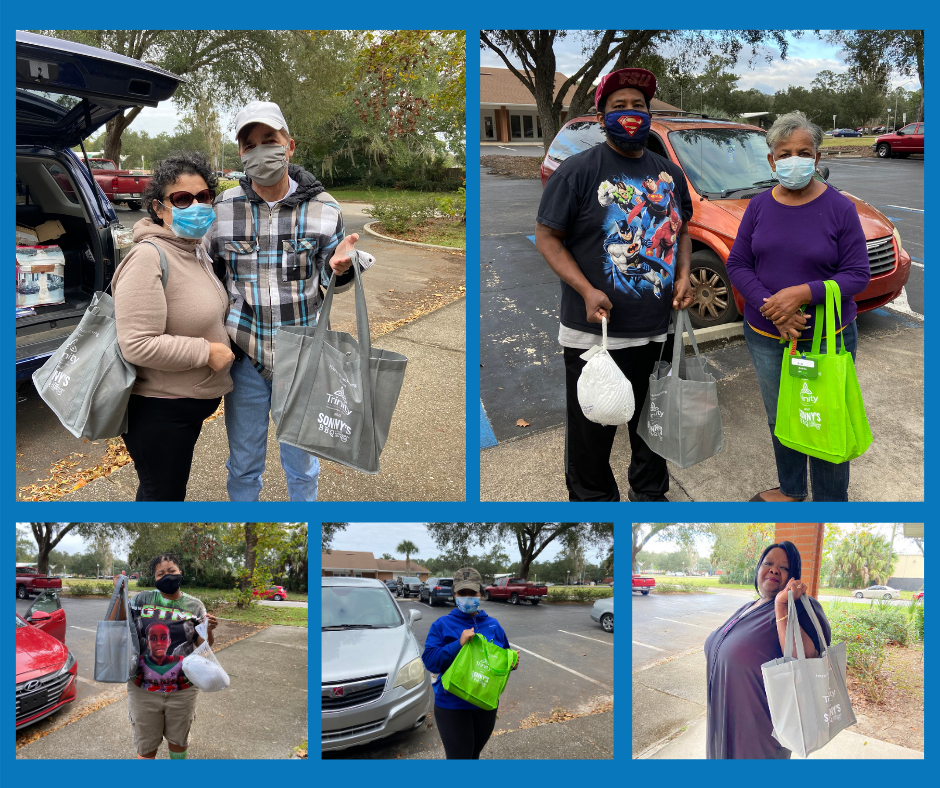
Our Thanksgiving Baskets Program was a success again this year! This last week the CIL was able to provide 20 of our consumers and their families with the basic needs for a great Thanksgiving meal. We were able to do with the help of Trinity Missions. They coordinate this amazing community wide program every year!
What is the Center for Independent Living?Centers for Independent living programs work to support community living and independence for people with disabilities across the nation based on the belief that all people can live with dignity, make their own choices, and participate fully in society. Dr. Tony Delisle and Amy Feutz from The Center for Independent Living of North Central Florida, shares how these programs provide tools, resources, and supports for integrating people with disabilities fully into their communities to promote equal opportunities, self-determination, and respect.
Disability impacts everybody. Disability is a natural part of life. It is exactly what it means to be a human being. This is a space where we can all come together collectively and unite under disability. Welcome to the Independent Life Podcast where we will be introduced to the services, ideas, issues, values, and people who will empower us to become the best version of ourselves imaginable to attain our independent living goals and to be of service to others. I am your host, Dr. Tony Delisle. 2020 has been quite the year I can say that it is been full of obstacles. And so the first quote that I’d like to share with everybody on The Independent Life has to do with obstacles. It comes to us from Marcus Aurelius. “The mind adopts and converts on to its own purposes, the obstacle of our actions, the impediment to our action advances, our action, which stands in the way becomes the way.” I’m not saying that disability is an obstacle. But having a disability certainly presents many obstacles to a socially, environmentally, and in many other ways. Many obstacles are in front of us. But that is the way to advance the actions for all of us to become the better versions of ourselves, and to serve others. This is Tony Delisle, Executive Director for the Center for Independent Living of North Central Florida, inviting you all to The Independent Life podcast. Very excited today. It is our first inaugural episode. And it really has come about through interesting times, here we are. And as 2020 comes to a close, November 3, Election Day, very interesting times that we’re in and to quote, somebody who said, “Never let a good crisis go to waste.” And here we are, trying something that’s different for us to do better outreach to our community to let them know who we are, and to empower people with disabilities. We are looking to really explore new ground, get outside of our comfort zone and invite you all to listen into us in the comfort of your own home, to learn more about the world of disability and living independently, and I’m joined here today with my colleague, Amy Feutz, who is the Associate Director for our center.
Amy Feutz 02:43
Hi, everyone.
Tony Delisle 02:44
It’s a pleasure. Like I couldn’t think of a better person to share this episode with you, Amy. Yeah, we’ve been through a lot together. And we were born on the same day August 4, I’ll withhold the year. So very excited to have a conversation with you, Amy.
Amy Feutz 03:00
Yes, great. We can get started. I think what we’re going to do is just start with the Why. Can you help our listeners better understand why CIL exist? Why is there a need? Why should anyone both with or without a disability care?
Tony Delisle 03:13
Because people with disabilities forms the largest minority group around one in four people in our country has a disability. And when we look at the data, it doesn’t lie. People with disabilities are less likely to graduate high school. 65% graduation rates with people with disabilities compared to around an 87% without disabilities. People with disabilities are two to three times more likely to be unemployed. People with disabilities are more likely to live in poverty. People with disabilities are more likely to live shorter, sicker lies from preventable diseases. Twice as likely to have cardiovascular disease, diabetes, stroke cancer… People with disabilities are less likely to afford housing, to have accessible housing, less likely to have adequate transportation. People with disabilities have more difficulty being included in everyday life and society, whether it’s due to effective communication, whether it’s a program access, people with disabilities are more likely to be vulnerable during disasters. We live in Florida. So hurricanes, we’re living in the middle of pandemic. People with disabilities are much more likely to be impacted by this pandemic. And so people with disabilities, unfortunately, are more vulnerable in many of these situations here. And so we exist to really empower people with disabilities to live independently and to beat these odds.
Amy Feutz 04:38
When you hear the name, Center for Independent Living, a lot of things about what we do here may come to mind. So what exactly happens here at the CIL?
Tony Delisle 04:47
Well, first of all, what we are not as an assisted living facility, we’re not a residential care facility. We don’t have beds. We are here to empower people to live in the community to whatever extent possible and that manifests in many different services and programs. We’re a nonprofit service agency, we serve 16 counties. Within our catchment area. We serve all disabilities, all ages, our services are free for all people. And so the services are really aligned with the why. People with disabilities are less likely to graduate from high school. So we have a high school high tech program that has a graduation rate of nearly 99%. We have a very robust Employment Services program that works with over 100 people at any one time trying to find meaningful and sustainable employment for them, and working with our business community to debunk many of the myths that are out there regarding hiring people with disabilities. We make sure that people have effective communication by providing sign language interpreting services programs for people. Because affordable housing’s such an issue, we work very hard to get public vouchers for people to get adequate access to homes and then making sure that those homes have access. Whether it’s wheelchair ramps or home modifications are durable medical equipment that might be needed to keep people in their homes, we make sure that we have that as well. Again, transportation being such a huge barrier. We are providing eligibility screenings to see if people are eligible for paratransit services and the type of paratransit services and if they need help navigating the bus systems, we provide some of those as well. We provide independent living skills classes where people can learn how to live healthy lifestyles, where people can come together, and peer support and social isolation and loneliness is a huge thing with people. And this is a place where people with disabilities can be supportive of one another and learn how to advocate for themselves, learn how to communicate, learn how to solve problems, and really come together as a community. And we’re very involved with emergency management. We work with emergency management professionals to educate them on the needs of people with disabilities, and connecting them with the community of people disabilities. We make sure that the shelters are accessible for people. We provide access to the community to get to know our emergency management professionals. Also in the time of COVID, we are distributing food and other resources to people in their homes, because people with disabilities that we serve often don’t have the access to food, to self care products, to disaster supplies, and other types of essential resources that people need during this pandemic. We were able to actually deliver them to people where they actually live in their communities. And it’s a really great opportunity for us to even reach more people throughout our 16 County catchment area. And if we don’t have the resources or the services for people with disabilities, we are so connected within our community. We have community partners that are throughout our catchment area that we work very closely with that we link them in through our information and referral services. And make sure that they have access to the resources and services that are out there within the community and really kind of come together to serve our population through the many different wonderful partners that we have.
Amy Feutz 07:58
Wow, that’s a lot. That’s a lot more than just a residential facility.
Tony Delisle 08:02
Yes, and we’re not here for pity. We’re not here for a handout, we’re here for a hand up. We really come together. And one of the wonderful things I love working here at the Centers and you know, I have a disability, a vision disability, I’m legally blind. And nearly two thirds of the people that work our center here have a disability. Over half of our board has a disability and all Centers of Independent Living have more than half of the staff having a disability. Who better to serve people with disabilities than people with disability?
Amy Feutz 08:32
We’re all about consumer control, correct? Yes, yeah. So that’s great. Now that we’ve learned a little bit more about the CIL. Can you tell us a little bit about yourself and how you initially started with the CIL?
Tony Delisle 08:43
Sure, like I mentioned earlier, I have a vision disabilities a degenerative disability, likely will go blind in my lifetime. And that’s something I’ve been challenged with for most of my life, whether it was education, meaning the accommodations I needed, but once I you know, outside of the academic setting, in the community, I relied on Centers for Independent Living to live independently, actually the one in Winter Park, the Center for Independent Living in South Florida, it was fantastic. And I wouldn’t be here sitting here today, if it wasn’t for those people that work there. And were able to provide me first that sense of community empowerment, and then the services that they were able to provide to me to really get to where I am to be able to continue on with my academic development, to be empowered to get go for the careers that have allowed me to be able to come back and serve other people with disabilities. And so it just so wonderful to be in the position that I am today. Because I was served by a center and just really inspired to help others that may have been in the situations that I was in to be able to lift them up to live the independent life.
Amy Feutz 09:53
Thanks so much for sharing that. I think it’s great you have a consumer perspective and now that you are our executive director being able to bring that perspective and how we serve our consumers, so I think that’s fantastic. And I appreciate you share that little bit of history about yourself. Now that we know a little bit more about you, I’m sure more on how CILs got started.
Tony Delisle 10:21
Sure. Ed Roberts is the gentleman who’s known for really starting the Independent Living movement, early 60s. He wanted to go to Berkeley. And back then they didn’t have a Disability Resource Center, they didn’t have wheelchair ramps, they didn’t have the Equal access and accommodations that thankfully, the universities and other schools have nowadays, to be able to do this. And so through his advocacy, he was able to go to Berkeley, and to become just this amazing advocate for independent living. And of course, this happened during the Civil Rights era. And with most social movements, they don’t exist in a vacuum, and they often juxtapose with one another. So a lot of the tactics and techniques that we’re using the Civil Rights Movement for advocacy for civil rights, were adopted for the Independent Living Movement, and it culminated in actual Congress passing the 1973 Rehabilitation Act. And that was a law that went into effect that, among other things, has funded Centers for Independent Living throughout the United States. And the idea being at that time, people with disabilities were pretty much warehouse and institutional facilities. And that’s how they were cared for, for the most part. And so with the 1973 Rehab Act really helped to get people disabilities out of the institutions and into the community, living in the community. And that is manifested into many of the different services and programs that I just described. And to prevent people from going insane institutional care facilities, whether that’s assisted living facilities, skilled nursing homes, homeless shelters, foster care, our prison system, domestic violence shelters, all of which have high percentages of people with disabilities. And so that’s really the space that Independent Living was carved out of, but then there’s other social movements that it came into intersections with. The consumerism movement, and that’s who we refer to people that access our services, our consumers, the idea being, that they’re the experts, they’re the ones that can identify their needs, and therefore they’re the ones that really drive the types of services that we provide to them. The self improvement movements that were out there about how we can really empower ourselves to live the independent life. And then the Demedicalization of disability. So the idea being that we’re, you know, we’re not, you know, something to be cured. My disability is a permanent disability. And I’m not a problem to be solved, but rather, looking at the social and environmental context in which disability takes place, and addressing many of those factors is getting outside of that medical model of really approaching disability. And the idea is also that, you know, the Independent Living philosophy says that we’re a diverse community, we actually have a lot to offer our society. Through the different life experiences that we have, we can be a valuable and contributing member, we share, you know, similar history, similar challenges. We just have a lot to offer people and we are stronger together unified. So this is part of the Independent Living philosophy, the independent living movement, and our independent living services.
Amy Feutz 13:30
That’s excellent. Tony, I do encourage those listening to please learn about the history of how CILs got started. It really is fascinating, and you’ll learn a lot. So Tony, now that our listeners have an idea of what CIL does provide for our consumers, how does someone reach out and connect with us, especially during this time?
Tony Delisle 13:55
Sure. So one of the best things to do is to go to our website cilncf.org. You can call our center. We have two offices, one here in Gainesville, and one in Ocala. Our Gainesville office is 352-378-7474 that’s 352-378-7474. And our Ocala office is 352-368-3788. That’s 3523683788. And so reach out to us, we want to we want to serve people and if you’re listening to this and you’re outside our catchment area, we’ll make sure that through the show notes or other resources, you can identify the Center for Independent Living in your area, as we want to make sure that we connect you to them because all the centers in Florida there’s 15 Centers for Independent Living in the state of Florida, and there’s nearly 500 nationwide. So this is a big network. And we want to make sure if you’re listening to this, that you know how to find your Center for Independent Living. So we’ll make sure that you have those connections and that contact information as well.
Amy Feutz 14:59
That’s great. Thanks so much. It was wonderful chatting with you, Tony.
Tony Delisle 15:03
This is very special time. This is a very special occasion. And I’m overjoyed with this. Again, I don’t think we would be here if we weren’t in necessarily a crisis. So what a great opportunity to serve better. Well, once again, Amy, it’s been a pleasure to have this conversation with you, this opportunity to bring this message out to a broader audience. I hope this really sparks conversations with people that are out there that we can raise awareness about Centers for Independent Living across Florida, across the nation, that people can feel a sense of community, empowerment, and unity through this because again, disability impacts everybody. If you don’t have a disability you know someone that does, and if you don’t have one, you’re likely going to get one. It’s just a part of human nature. But it doesn’t mean it’s the end of your life. In fact, it could be the beginning of your life. And this episode is the beginning of many more to come, where we can come together as a community with Unity through disability. Very exciting.
Amy Feutz 16:05
It is very exciting. Thanks so much. It was great chatting with you, too.
Tony Delisle 16:08
Thank you so much for this first step of 1000 mile journey or more. And we look forward to having many more episodes where we can share perspectives, ideas, issues, letting people know about the services that are out there. This is very exciting, The Independent Life first ever episode very excited to have you all join us for this and many more to come: The Independent Life podcast.
Amy Feutz 16:34
Thanks for listening to The Independent Life podcast brought to you by the Center for Independent Living of North Central Florida. If you like what you hear, please rate, review and subscribe. And if you know anyone who might benefit from listening, share this podcast and invite them to subscribe too. For questions, suggestions, or if you have a story you’d like to share, please email us at cilncf.org@gmail.com or call us at 352-378-7474 Thanks for joining us. Until next time, support, advocate and empower each other to live the independent life.
The Independent Life is a podcast created by people with disabilities for people with disabilities and those who care about them. Here, we offer a unique lens into the world as we live it. Join us as we create unity through disability by taking a deep dive into the issues, ideas, services, and stories of courage, advocacy, and empowerment for living the independent life.
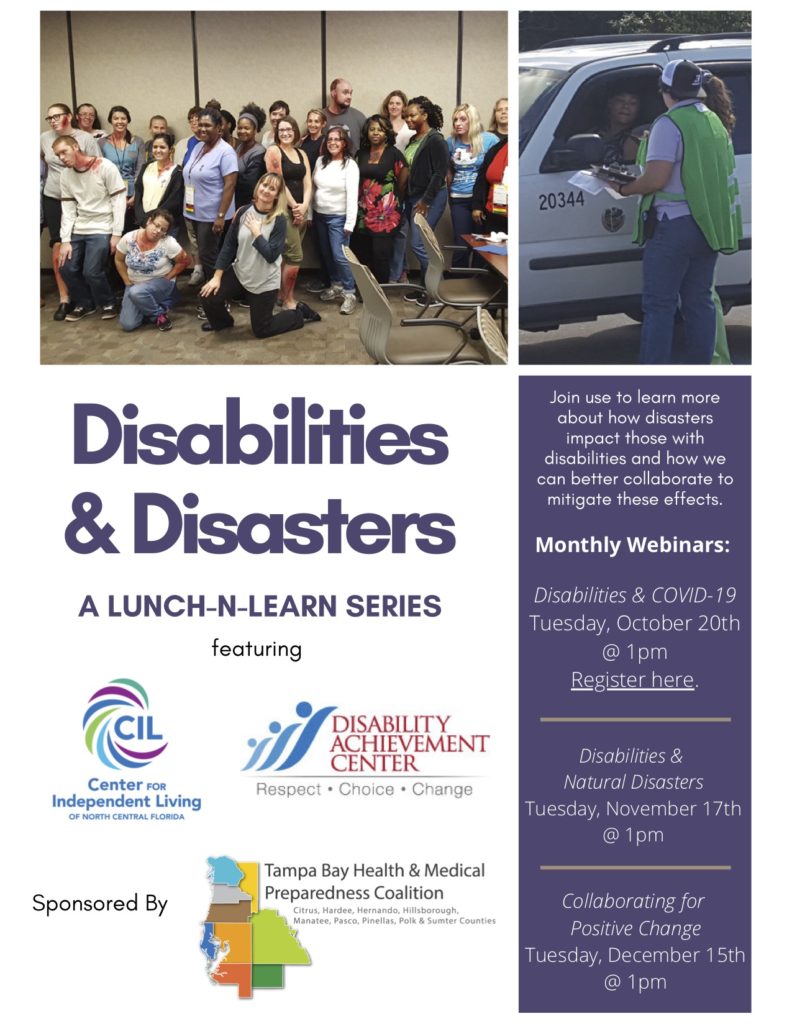
Don’t forget to join us for the 2nd installment of Disabilities & Disasters: Lunch-n-Learn series. The 2nd installment is Tuesday, November 17th @ 1 pm. Each month we cover disasters that impact those with disabilities and how to diminish the effects. Click the following link to register for this informative event! https://disabilitiesanddisasterscovid19.eventbrite.com
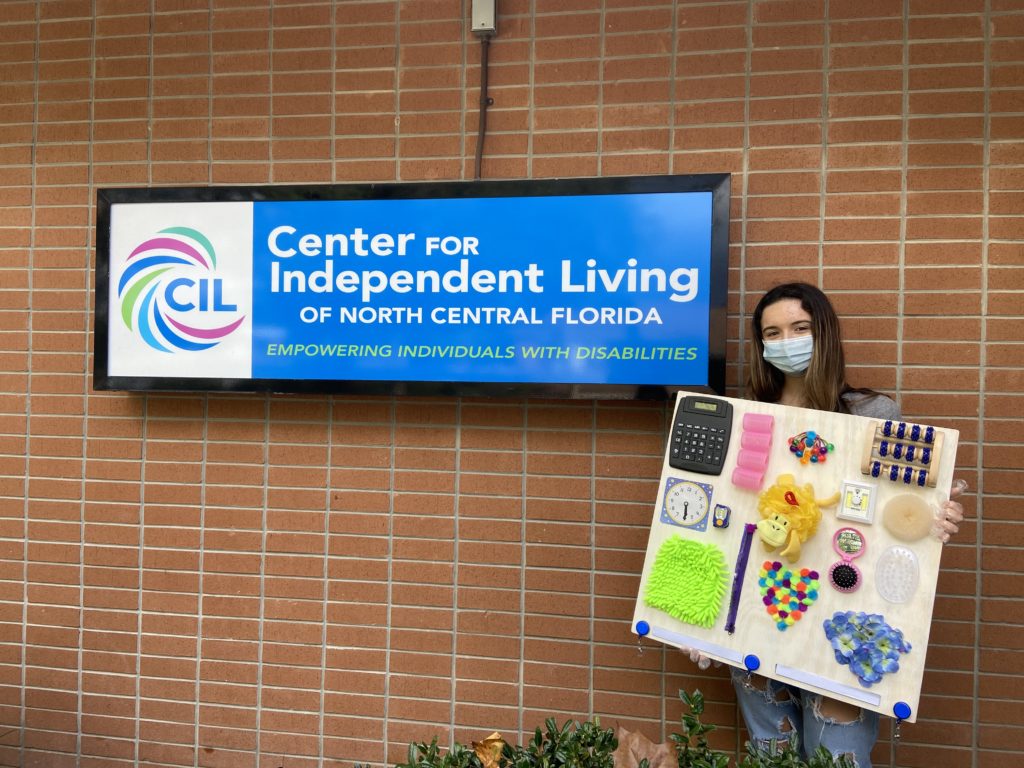
Earlier in October, Lambda Theta Alpha Latin Sorority highlighted Disability Employment Awareness Month as part of their Annual Unity Jam Week. During the week they hosted fundraisers, informational forums, community service activities, and more! They raised $200 in donations for our CIL! In addition to the monetary donation, they created sensory boards to used when resume in-person classes. The CIL couldn’t be more grateful!
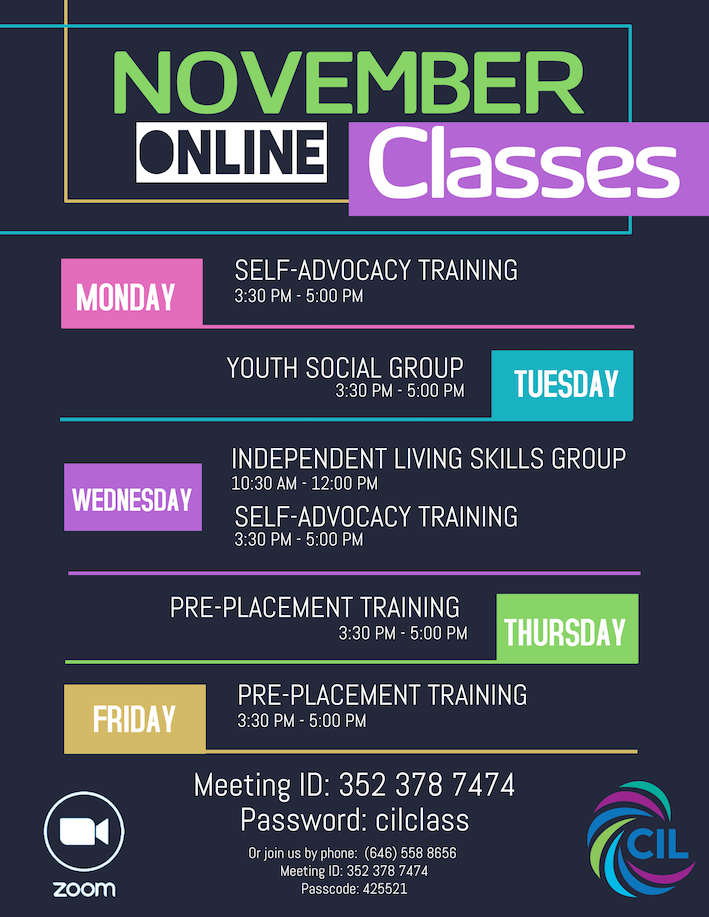
Even though we are no longer able to host CIL classes in person that doesn’t mean that we have stopped providing the resources our consumers need! Join us for our various online classes every day of the week in November!
* Wednesday, November 11th is Veteran’s Day so the CIL will be closed that day and there will be no class that day.